Wednesday, 1 September 2010

It Was Twenty (Plus) Years Ago Today.


It’s no secret that I don’t have a very high opinion of Christianity, I’ve seen so many sins and evils committed in the name of Christianity, so much prejudice excused as Christian belief; yet there are still many good people who are Christians, unfortunately their voices are often drowned out by the bigotry. On Monday, some of those good people made their voices heard.

Peter Tatchell, veteran gay rights campaigner, spoke at the Greenbelt Christian festival, held each year at Cheltenham Racecourse. He spoke about "queer freedom in Africa”, especially the homophobia of some church leaders there. At the end of his talk he received a standing ovation (http://tinyurl.com/333h9jx).

In my early twenties, over twenty years ago (!!), I went to the Greenbelt Festival, but I found it a very different place. Any mention of homosexuality, and most times there wasn’t any, was the “traditional” negative line. I attended one seminar called “Sad To Be Gay” (sic), which draw the conclusion that any expression of a gay sexuality was a sin.

Things have certainly changed since I was last at Greenbelt, there are Christians out there who aren’t toeing the “party-line” of the Church’s homophobia. Unfortunately, the homophobic ones are still shrilly vocal. Lisa Nolland, on the Anglican Mainstream website, back in April, called for Christians to boycott Greenbelt just because Peter Tatchell would be speaking there (http://tinyurl.com/39sco9y). She said it wouldn’t be a safe place for children, again linking homosexuality and pedophilia – that old and nasty lie.

Some Christians are moving away from the Church’s homophobia, and that should be applauded, but there’s still a very long way to go…

Drew.

Tuesday, 24 August 2010

The Sins of the Catholic Church, No 4,782


In July 1972 an IRA bomb went off in Claudy, County Londonderry, killing nine people, three of them children. Today a report was published that the IRA leader responsible for this bombing was Fr James Chesney, a Catholic Priest, but he was never prosecuted (http://www.bbc.co.uk/news/uk-northern-ireland-11061296). After a secret meeting between then Northern Ireland Secretary William Whitelaw and the leader of Ireland's Catholics, Cardinal Conway, the Catholic Church and the British Government struck a deal whereby Fr Chesney was moved to a parish in the Republic of Ireland, were the North Ireland police couldn’t reach him. Fr Chesney died in 1980.

Yet again the Catholic Church has covered up the crimes of one of their priests, this time in collusion with the British Government. They have done this countless of times before, especially in the cases of child abusive, showing little or no regard for justice. This time the priest was a murderer and they still moved him out of reach of the police. How can the Catholic Church claim to be a Christian organisation when they act so immorally?

The head of the Catholic Church in Ireland, Cardinal Sean Brady, said the church was not involved in a cover-up over Fr Chesney. How can we believe this when they were the ones who moved Fr Chesney to the Republic of Ireland where he was out of the reach of the police and didn’t once hand him over to the police for questioning. The argument has been made that the police couldn’t have arrested a Catholic priest in Northern Ireland, in 1972, because it would have just fanned the flames of the sectarian violence; but the church could have excommunication Fr Chesney, the present Pope, in his previous role, excommunicated people for far less. The Catholic Church’s hands are red with this cover-up, just as much as William Whitelaw and the Tory government of 1972.

The Catholic Church isn’t just morally bankrupt but willingly corrupt. They have routinely covered up child abusive for decades upon decades, now we find out that they have also covered up a terrorist and murdering priest. What depths won’t they go to? Can anyone answer this?

Later this year the Pope will be visiting Britain and we’ll have to pay twenty million pounds plus for the privilege. I no longer want the Pope to pay ALL the expenses of his visit; I DON’T want him visiting here at all. If I had my way the whole organisation would be disbanded and their great wealth given to the poor and disadvantaged, given to all the people the Catholic Church has harmed or lied about.

I don’t know if there is anything the Catholic Church can begin to do to make amends for its sins, but they don’t seem at all interesting in doing so...

Drew

Wednesday, 18 August 2010

Look At All the People Looking All The Same

Last Sunday, Martin and I went to Three Mills Island, just up the road from us at Bromley-By-Bow. We went there so Martin could take some photographs (One of them illustrates this blog). It’s one of our interesting local places.

When we arrived there we found that it was already full of people and, without even hearing them speak, I knew they were from a coach party. Just by their appearance, they screamed that they were on a coach trip. They were “sensibility dressed”, laced up shoes, casual trousers and anoraks (the women as well); were sat together in couples and small groups; eating their packed lunches and drinking from thermos flasks.


As we wondered around, Martin taking his usual hundreds of photographs, I watched those people from the coach party (and they were a coach party because their coach turned up and in an orderly line they boarded it). They were so obviously alike, as if they had to look and behave this way to be accepted on the coach trip. Which made me think about how we want to belong to a group or crowd, and so often we do that by the way we look and dress. The first time I went to Lakeside Shopping Mall I was shocked by how alike almost everyone there looked. When we’re in any shopping mall I often watch the people around me and how alike those groups are, especially the teenagers. The groups of boys all wearing the same tops and trousers, with the same hair cut. The groups of girls with the same hairstyle and make-up, all of them in the same lengthen of skirt.

I know, as human beings, we want to belong, and often we do this through the way we look and act. When I was coming out and trying to build my own identity that was important to me, I wanted to belong with the gay men I saw in the clubs. It took me a few years to realise I didn’t belong with that group, the gay men out on the gay scene. The first thing I did when I realised this was to grow my hair out long. Strangely that did make me more attractive to other men, but gay men I meet away from the gay scene.

For me being my own person is the most important, and with that I’ve found acceptance in the most interesting and diverse groups.

So what made me have all these strange thoughts on a quiet Sunday afternoon trip out?

At the moment I’m finishing off a short story about identity. A man finds out that he’s actually a human clone, and that knowledge shatters his identity. He thought of himself as an individual, when in truth he is merely one of many copies of another.

With me, life doesn’t just influence my writing but my writing can bleed into my life... what fun...

Drew.


P.S. You can see more of Martin’s pictures from Three Mills Island at: http://martins-day.blogspot.com/2010/08/three-mills-island.html


Friday, 13 August 2010

“Do As I Write and Not As I Do”

I am not a fan of self-help books. In my experience they are far more about the author’s prejudices and political views. They are often based just on the author’s experiences, plus maybe a few of their friends’ too, and are more about that person’s views then a book of practical information. Simply look at the shelves full of them at any bookshop; also take a look at their authors’ credentials, most of them have no more experience than the majority of the people in the bookshop.

Imagine my reaction when I was asked to review a self-help book by the Nursing Standard, but I have a policy to never turn down writing. I’ve a good relationship with them and I owe them a lot, so if they asked me to review a telephone book then I would.

Fortunately, the book (Living Confidently with HIV) is the exception and not the rule. It is a self-book written by healthcare professionals and is based on their professional experience. This book stands head-and-shoulders above the herd of the rest, so writing the review was fairly easy. The hardest reviews are those for the books that are poor or just plain bad, because those have to be written in a non-petty tone, even if I just want to through the book out of the window because it’s so bad.

The review was published in this week’s copy of Nursing Standard. If you want to read the review you can find it on my website (http://www.drew-payne.co.uk/index_files/Page1419.htm)

Drew.

Sunday, 1 August 2010

All Things Remembered

Recently I visited St Leonards’ Hospital, in Hackney, East London. I was there to run Infection Control Update sessions, but I had time to look around of the hospital – also called trying to find the restaurant to get some lunch. It was a wonderful old Victorian hospital, though completely impartial for modern healthcare, which is now used for old-patient care and houses a community trust’s administration.

In one of the hallways were two, very large plaques commemorating two of the hospital’s famous employees, Dr James Parkinson and Matron Edith Cavell. Both of them are famous for very specific things, yet the important things they should be remembered for have been almost forgotten.

James Parkinson gave his name to Parkinson’s disease. In 1817 he published the paper An essay on the shaking palsy, which described the first cases of Parkinson’s disease. Edith Cavell was a nurse in Brussels during the First World War, she helped British soldiers escape German occupied Belgian and back to Britain; the Germans caught her and executed her for treason. She became a cause-celeb and was turned into a “heroine” for British patriotism.

Yet, both of them introduced very important innovations and changes that have had a positive impact on modern healthcare, but that part of their lives has seemed to be completely forgotten about now.

James Parkinson was the first doctor to isolate infectious, or “fever”, patients on a separate ward at St Leonards’ Hospital. This was the forerunner of modern isolation procedures, it was the first time measures were taken to stop cross infection from infectious to non-infectious patients. This has saved the lives of millions of people over the years (regardless of the stories in our media).

Edith Cavell introduced and championed nurse education. Originally, Florence Nightingale was against educating nurses, she said that women’s natural “aptitudes” were all that was needed to be a nurse (sic). How wrong she was. Educated and professional nurses have saved millions of people’s lives over the years.

It’s strange what people are remembered for and what parts of their lives are forgotten about after their deaths. Sometimes history whitewashes people and other times all it focuses on are the scandals of someone’s life. Why did history ignore such important elements of James Parkinson and Edith Cavell’s lives?

This led me to wonder what I would be remembered for (Such happy and positive thoughts I have...). Would it be my writing? Would it be my friendships and my relationship with Martin? Would it be my professional career? Will I be remembered at all? I’ll never know and that’s a good thing. But it has got me thinking, how people are remembered and why.

Watch my writing; you may see more about this later.

Drew

Wednesday, 7 July 2010

That Once A Year Day


Last Saturday was Lesbian, Gay, Bisexual and Transgendered Pride March, that annual event went the queers take to the streets of Central London.

I’ve been going to the Pride March ever since I could (I moved to London two months after the 1987 March and so had to wait nearly a year to go one my first one). Back in 1988 it was a very different event. To start with it was a much smaller march (Saturday saw over a million people in London for Pride) but also it much more political tone, people chanting and a lot more banners with slogans on them. The route was lined with police, many of them looking decidedly nervous. But this was 1988 and it was a very different time, the Government was opening using homophobic rhetoric and the press was rabidly homophobic.

Saturday’s march was very different; it was much more celebratory then political, though it was far from apolitical. There were more police march at Pride then lining the route, there were also Soldiers, Sailors, Air Force Personal, Firemen, Paramedics and Healthcare Staff all on the march (many of them in uniform). There was also far more people dressed in costumes on Saturday. Back in 1988 the people who were dressed up were either drag queens or leather daddies, there weren’t any women in costumes. On Saturday there seemed to be just women dressed up in different and elaborate costumes as there were men.

Things have very much changed over the years, now the celebrities and politicians are lining up to take part in Pride rather than running away from it. Many people complain that Pride is the same as it was, often complaining that it isn’t political anymore. To me, things do change, they can’t stay the same, and the changes in Pride are a good thing. Britain isn’t the same country as it was back in 1988, we have won so many changes and rights and that’s something we should celebrate at Pride. Yes, we still have a way to go but we’re not living in cold climate of homophobia we once were.

Pride has always been something important in my life, something I couldn’t miss it each year, it was a place where I could be openly gay and be in the majority, where my sexuality wasn’t an issue, where I could be surrounded by other lesbians and Gay Men. But, for many years there was also a tinge of unhappiness for me at Pride. I was single and all around me were happy gay couples all holding hands together, it just a re-minded me of how much I wanted a lover. Now, and for over the last twelve years, I’ve shared Pride with Martin. I don’t want to be one of those people who ram their relationship down other people’s throats, but sharing Pride with Martin is should a wonderful thing.

Drew.

P.S. The pictures illustrating this blog entry are just some of the pictures Martin took at this year’s Pride. More of them can be seen on his blog, http://martins-day.blogspot.com/


Tuesday, 15 June 2010

Canary

(The second play what we saw on our holiday)
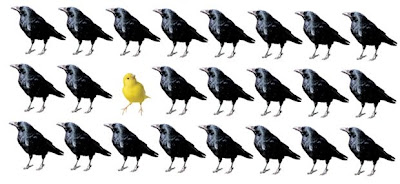
'Women and gay people are the litmus test of whether a society is democratic and respecting human rights. We are the canaries in the mine.'
Peter Tatchell.

This quote, we’re told in the play’s notes, was part of the inspiration behind Jonathan Harvey’s latest play, Canary. The quote might seem a little naive but look closely at it and there’s a lot of true in it, it’s certainly a mark of a society in how it treats its minorities – any society can value the majority – and gay men, lesbians and woman have been politically and economically marginalised in British culture for centuries.

Previously, Jonathan Harvey’s plays have been very personal and domestic dramas, which focus on the lives of a small group of people over a certain period of time (His break through play Beautiful Things is a very good example of this). With Canary, Jonathan Harvey has moved onto much bigger subject matter, and he certainly rises to the occasion.

This is an epic play, its story spans from the police witch hunts of gay men in the early sixties, through aversion therapy of the mid-sixties, to the Gay Liberation front of the nineteen-seventies, through the AIDS crisis of the nineteen-eighties, and the moral backlash that went with it, right up to the present day, with an openly gay man presenting a primetime television program. The play, though, isn’t as neatly laid out as this description. The play jumps from different stories and different time periods, stories running at the same time, but it does all come together.

The play follows Tom, a policeman in the early sixties and a Chief Constable in the present day, and the relationships in his life. In present day Tom, his wife and daughter are besieged in their home by the press because someone has leaked a secret about him. In the nineteen-sixties young Tom and his lover Billy are caught by the police. Billy is sent to a mental hospital for aversion therapy to “cure” him. In the nineteen-seventies Mary Whitehouse plans her Festival of Light to reclaim the country from promiscuity. In the nineteen-eighties teenagers and best friends Russell and Mickey move to London but they get swept in the emerging AIDS crisis.
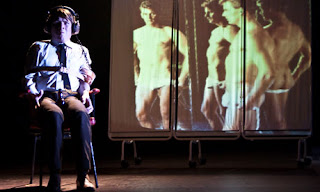
This isn’t an easy story to follow (As I saw after the performance by other people in the audience who obviously hadn’t followed the plot and were left confused), this isn’t a play just to sit back in and let it flow over yourself, you have to pay attention to the plot. The play goes from high comedy (the scene were the Gay Liberation Front disrupt the Festival of Light had me crying with laughter), to painful drama, through horror (the nightmare of aversion therapy) and tragedy (AIDS in the 1980’s), to magic realism (were Tom’s wife Ellie goes through her own journey into her past to make sense of her life). But ultimately this is a deeply rewarding play because here Jonathan Harvey explores the human stories and emotional cost of the events of our recent gay history. Unfortunately this history is being forgotten, our British society seems uninterested the experiences of lesbians and gay men, we may have acceptance but who’s interested in our journey here?

The acting here was universally good, the actors investing so much into their characters to make them come alive, even when the character was not likeable or only in one scene. Paula Wilcox and Sean Gallagher turn in their usual fine performances (I often wonder why these are two aren’t much bigger stars, they give such good performances) but the acting awards here must go to Philip Voss. His performance as older Tom was both cold and reserved but also warmly touching, his reconciliation with his former lover Billy after nearly forty years was almost heart breaking; but his impersonation of Mary Whitehouse made me week with laughter. He played her as a monster in a nylon dress with no understanding of how ridiculous she sounded.

This isn’t an easy, little drama but a bold and broad one, but it is well worth the effort of following its story. Jonathan Harvey here puts on stage stories that are rapidly being forgotten about in our society, stories that have shaped so much of what it means to be a gay man in 2010, stories we need to talk about. This play has been compared to Tony Kushner’s Angels in America, it is certainly in the same epic and political vein, and that’s no bad thing.

Please Jonathan Harvey, more plays like Canary.

Drew.